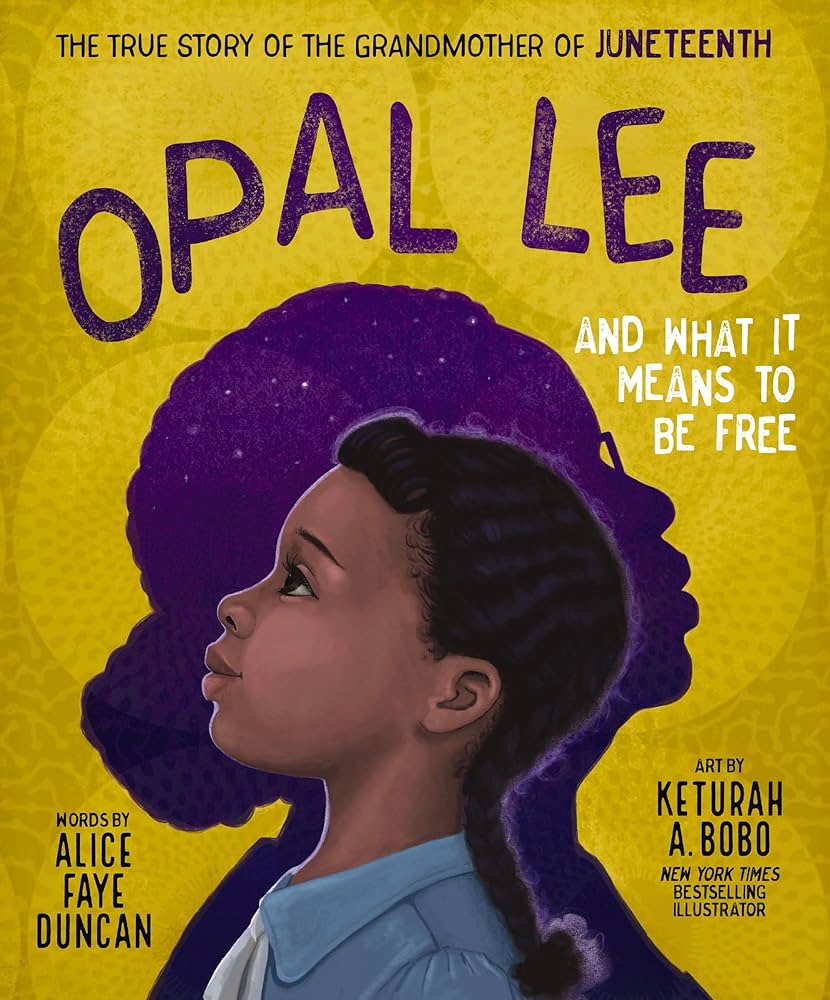
Opal Lee and What It Means to Be Free
Written by Alice Faye Duncan · Art by Keturah A. Bobo
The true story of the Grandmother of Juneteenth — a beautifully illustrated children's book by New York Times bestselling illustrator Keturah A. Bobo.
The Five Truths of Juneteenth
And What They Reveal About Recognizing Opportunity in the New AI Economy
One of the things that I'm so grateful for is that I actually had a chance to develop a close relationship with my grandmother, Mary Douglas, born in 1920. Now, her perspective on life was much different than mine, and it would also be exceptionally the same. Even though my grandmother grew up in a time when she was only allowed to go to school for three months because of her skin color, she did not let that stop her from becoming what I like to call a great Titan of Life.
That phrase is referring to the tremendous heritage, story, and qualities that her example has continued to pass down to me, my mom and dad, and that will continue forward into the future. That foundation built on faith helped her through what some might see and say are things that cannot be worth it. That's the power of understanding your potential, and so to me, Juneteenth represents that potential, especially in African Americans. In me, the sky's the limit.
On June 19, 1865, Union General Gordon Granger arrived in Galveston, Texas and announced that enslaved people there were free — a freedom that had legally existed for two and a half years under the Emancipation Proclamation. The gap between truth already in effect and truth finally recognized is the heart of the Juneteenth story. That same gap is opening right now around artificial intelligence and the new economy it is creating. The following five truths examine both, and what they mean for anyone deciding whether to act now or wait.
The Five Truths
Tap any truth to explore its full meaning.
The True Implication of Not Acting Now
The story of Juneteenth is ultimately not a story about a date — it is a story about the distance between what is already true and what someone has come to know is true for themselves. That distance is where the cost lives. The new economy forming around AI is not a future event waiting to arrive; like emancipation in 1865, it is already in effect. The only open question is how long the gap between what is possible and what is acted upon will be allowed to last — and who will carry the cost of that gap if it is allowed to stretch unnecessarily.
The five truths above point to one conclusion: recognition deferred is not recognition denied, but it is rarely free. The opportunity to close that gap now — rather than years from now — is the opportunity itself.
Seven Things About Juneteenth Most People Never Learn
And What Each One Means for Voice Up, the AI Economy, and What Comes Next
A Companion to "From Fuller Road to You" · Voice Up Publishing, Inc.
Most people know the basic outline of Juneteenth: freedom announced two and a half years late in Galveston, Texas. But the deeper history holds seven lesser-known stories — and each one lines up, almost exactly, with something Voice Up is already doing or is about to do next.
Reflection Questions — Seven Things About Juneteenth
After reading all seven facts and their Voice Up connections, consider these questions. You may include your responses in the reflection form above.
- Of the seven facts in this document, which one surprised you the most, and why?
- Juneteenth shows a gap between something already being true and someone finding out it's true for them. Where might that same kind of gap exist in your own life right now?
- Fact 1 shows that news travels fastest peer to peer, person to person. Who in your life has "delivered the news" of your own potential to you — and have you ever done that for someone else?
- Fact 4 shows a community responding to exclusion by buying their own land instead of waiting for permission. What is one thing you could build or own for yourself, instead of waiting for someone else to make room for you?
- If Voice Up created a "Watch Night" moment built around your own purpose, what would you want to be watching and waiting for?
Looking Ahead
Each of these seven stories points toward the same place Voice Up is already headed: a global ambassador network that delivers recognition peer to peer, an AI economy pipeline that turns naming into wages immediately, owned infrastructure (a mailbox, a future credit union, a research lab charter) instead of borrowed permission, a reconnection model built for the whole world, and a faith-rooted rhythm of watching and waiting together before recognition is announced. The VoiceUp Gift Card Reward Scholarship Fund is simply where all of that meets the individual person, today, $400 at a time.
References
- American Battlefield Trust. (2020, June 12). 10 facts: Juneteenth. https://www.battlefields.org/learn/articles/10-facts-juneteenth
- Britannica. (n.d.). General Order No. 3: Juneteenth, June 19, meaning, & full text. Encyclopedia Britannica. https://www.britannica.com/topic/General-Order-No-3
- CNN. (2025, June 9). Juneteenth fast facts. https://www.cnn.com/2022/08/05/us/juneteenth-fast-facts
- Defender Network. (2023, June 19). Top 10 little-known Juneteenth facts. https://defendernetwork.com/news/local-state/top-10-little-known-juneteenth-facts/
- FOX 4 Dallas-Fort Worth. (2026, June 19). Decades before becoming a federal holiday, Juneteenth belonged strictly to Texas. https://www.fox4news.com/news/decades-before-becoming-federal-holiday-juneteenth-belonged-strictly-texas
- History.com. (2026, June 17). Why it took more than 2 years for emancipation to reach Texas. https://www.history.com/articles/juneteenth-emancipation-proclamation-texas
- Library of Congress. (n.d.). Today in history — June 19. https://www.loc.gov/item/today-in-history/june-19/
- National Geographic. (2026). How Black Union soldiers made Juneteenth possible. https://www.nationalgeographic.com/history/article/juneteenth-black-soldiers
- National Museum of African American History and Culture. (n.d.). The historical legacy of Juneteenth. Smithsonian Institution. https://nmaahc.si.edu/explore/stories/historical-legacy-juneteenth
- National Museum of the United States Army. (n.d.). Juneteenth and the U.S. Army. https://www.thenmusa.org/articles/juneteenth-and-the-u-s-army/
- Texas Institute for the Preservation of History and Culture. (n.d.). Juneteenth: The Emancipation Proclamation — Freedom realized and delayed. Prairie View A&M University. https://www.pvamu.edu/tiphc/research-projects/juneteenth-the-emancipation-proclamation-freedom-realized-and-delayed/
Reflection: The Five Principles
Respond to three reflection questions that connect the Five Truths of Juneteenth to Voice Up's core principles: Collaboration, Humility, Precision, Patience, and Empathy.
Free Account Required
This content is part of the Voice Up Cross-Sector Learning Initiative. Create a free account to access case studies, submit reflections, and track your progress.
How to get started
Click the "Create Free Account" button below
Sign up with your Google account or email address
You'll be redirected back here automatically
Start exploring case studies, reflections, and more
No credit card required · 100% free · Instant access
Bonus: Watch & Reflect
In this Juneteenth special from Democracy Now!, historian Clint Smith — author of How the Word Is Passed: A Reckoning with the History of Slavery Across America — explores the deeper meaning of Juneteenth, the "both/and" of mourning and celebration, and why symbols alone are never enough.
Source: Democracy Now! · Published June 19, 2026 · 20:28
Bonus Reflection Questions — Based on the Video
After watching the video, consider these additional questions. You may include your responses in the reflection form above.
- The "Both/And" of Juneteenth: Clint Smith describes Juneteenth as a moment that holds both mourning and celebration at the same time — mourning for the years freedom was withheld, and celebrating the end of an egregious injustice. How does this "both/and" framing connect to how you personally think about progress? Can you identify a moment in your own life or field where something was worth celebrating and worth grieving at the same time?
- Symbols vs. Substance: Smith argues that making Juneteenth a federal holiday is important but "clearly not enough," especially when legislative efforts simultaneously try to restrict how slavery is taught. How does this tension between symbolic recognition and substantive action show up in your own profession or community? What would "enough" actually look like?
- The Emancipation Proclamation's Limits: The video explains that the Emancipation Proclamation was a military edict, not a universal freedom order — it didn't free enslaved people in Union border states, and it could only be enforced where Union soldiers physically arrived. How does knowing this change the way you understand the gap between policy and lived reality? Where do you see similar gaps today between what is "officially" true and what people actually experience?
- Grassroots Before Headlines: Both Opal Lee's decades of advocacy and the grassroots organizers Clint Smith highlights in his book show that Juneteenth's recognition came from the bottom up, not from a top-down decision. Who are the "Opal Lees" in your own community — people doing the work long before anyone recognizes it — and what would it mean to support their efforts now rather than after they succeed?
- Freedom from the 19th to the 4th: Opal Lee advocates celebrating freedom from Juneteenth (June 19) through Independence Day (July 4), noting that Black Americans "weren't free on the 4th of July, 1776." How does this reframing of the American freedom timeline challenge or deepen your understanding of what freedom means in this country — and who gets to define when it begins?
The Grandmother of Juneteenth
At 94 years old, Opal Lee — known as the "Grandmother of Juneteenth" — has dedicated her life to making sure the nation never forgets what June 19th means. From surviving a mob that destroyed her family's home on Juneteenth 1939 to leading her iconic 2.5-mile walk symbolizing the two and a half years freedom was withheld, her story is a living bridge between history and the work that remains.
Source: Southern Living · 5:45
Bonus Reflection Questions — The Grandmother of Juneteenth
After watching the video, consider these additional questions. You may include your responses in the reflection form above.
- The 2.5-Mile Walk: Opal Lee's annual walk from downtown Fort Worth covers 2.5 miles — one mile for each of the two and a half years freedom was kept from enslaved people in Texas. If you were to design a symbolic action to represent a gap that exists in your own field or community today, what would it look like, and what distance or duration would it represent?
- Surviving Hatred, Choosing Purpose: When Opal Lee was 12, a mob of 500 destroyed her family's home on Juneteenth simply because they moved into a white neighborhood. Rather than letting that define her with bitterness, she turned it into a lifelong mission. What does her example teach you about the relationship between personal trauma and public purpose? How might you transform a difficult experience into fuel for meaningful work?
- "None of Us Are Free Until We Are All Free": Opal Lee closes with this powerful statement. How does this idea challenge the notion that freedom or opportunity is an individual achievement? In the context of the AI economy and Voice Up's mission, what would it look like to ensure that new economic opportunity reaches everyone, not just those who discover it first?
- What Freedom Actually Meant: In the video, Opal Lee describes what the formerly enslaved gained — the ability to name themselves, keep their children, own property, vote, and pay taxes. These are things most people take for granted today. What are the modern equivalents of those freedoms that people are still fighting for, and how does naming your own value (as Voice Up teaches) connect to the original act of naming yourself?
- Juneteenth as a Unifier: Opal Lee describes Juneteenth not as a day of division but as "a unifier" — a call to work together to eradicate disparities in schools, healthcare, jobs, and pay. How can you apply that unifying spirit in your own professional practice? What is one concrete step you could take this month to bridge a disparity you've personally witnessed?
Dr. Opal Lee: From Freedom Fighter to Public Health Champion
As she approaches her 100th birthday, Dr. Opal Lee has turned her attention to a new battle — the health disparities killing Black women at disproportionate rates. A breast cancer survivor herself, she is now lending her voice to the American Cancer Society's Voices of Black Women study, a landmark effort to enroll 100,000 Black women and close the research gap that has left minority health outcomes decades behind.
Source: NBC DFW · Published June 19, 2026 · 5:13
The Life & Legacy of Dr. Opal Lee: Human Rights, Public Health, and the Long Walk Toward Freedom
Born October 7, 1926, in Marshall, Texas, Opal Lee grew up during Jim Crow segregation. She graduated high school at 16, earned her bachelor's degree in elementary education from Wiley College, and later completed a master's degree in counseling and guidance from North Texas University in 1960. For 24 years she served the Fort Worth Independent School District as a teacher and counselor before retiring in 1977.
The 1939 Trauma That Forged a Mission. On Juneteenth 1939, when Opal was 12, a white mob — estimated at 500 — attacked her family's home because they had moved into a white neighborhood. The mob destroyed the house and burned the furniture. Police told her father that if he fired his gun, they would "let the mob have him." The family fled under cover of darkness. Rather than becoming defined by that hatred, Opal Lee transformed the wound into a lifetime of advocacy.
From Educator to National Icon. After retirement, Lee became a founding member of the Tarrant County Black Historical and Genealogical Society and began organizing Juneteenth celebrations in Fort Worth. In 2016, at age 89, she launched her campaign to make Juneteenth a federal holiday — walking 2.5 miles each day to symbolize the two and a half years freedom was withheld. She walked from Fort Worth to Washington, D.C., gathering 1.5 million petition signatures along the way. On June 17, 2021, she stood beside President Biden as he signed the Juneteenth National Independence Day Act, making it the first new federal holiday since Martin Luther King Jr. Day in 1983.
Recognition & Honors. In 2024, she received the Presidential Medal of Freedom — the nation's highest civilian honor. She holds honorary doctorates from Southern Methodist University, Texas Christian University, and Wiley University. She has been nominated for the Nobel Peace Prize and is the author of a children's book that teaches young readers the meaning of Juneteenth.
The Public Health Connection. Dr. Lee's latest chapter connects the fight for freedom directly to the fight for health equity. As a breast cancer survivor diagnosed at age 73, she now advocates for the American Cancer Society's Voices of Black Women study, which seeks to enroll 100,000 Black women to close dangerous gaps in cancer research. The numbers are stark: Black women are 38% more likely to die from breast cancer and twice as likely to die from uterine cancer compared to white women — yet less than 4% of the American Cancer Society's 2.5 million research participants have been Black. Dr. Lee's message: "We're all in this together. Every one of us."
Why This Matters for Voice Up. Opal Lee's arc — from a 12-year-old girl whose home was destroyed to a 99-year-old woman holding a Presidential Medal of Freedom — is the living proof of what Voice Up teaches: that purpose does not expire, that trauma can become fuel, and that the same persistence required to win a federal holiday is the same persistence required to close the gaps in health, wealth, and recognition that still define who lives fully and who does not. Her pivot from civil rights to public health demonstrates that freedom is not one cause — it is every cause where people are dying or suffering because of who they are.
Sources: National Museum of African American History and Culture (Smithsonian); NBC DFW (June 19, 2026); American Cancer Society — Voices of Black Women Study; Southern Living; Forbes 50 Over 50; PMC/National Institutes of Health — Health and Racial Disparity in Breast Cancer (2020).
Bonus Reflection Questions — Human Rights, Public Health & Dr. Opal Lee
After watching the video and reading the biography above, consider these questions connecting freedom, health equity, and purpose.
- Freedom and Health as One Fight: Dr. Opal Lee's life shows that the fight for civil rights and the fight for health equity are not separate causes — they are the same cause in different forms. Black women are 38% more likely to die from breast cancer and twice as likely to die from uterine cancer, yet less than 4% of major cancer research participants have been Black. How does understanding freedom as a health issue — not just a legal or political one — change the way you think about what "liberation" actually requires?
- Research Representation as a Civil Right: The Voices of Black Women study exists because medical guidelines and treatments have been built on data that overwhelmingly excludes the people most at risk. Dr. Lee calls participation an act of service — "so that you can pass it on to your children and they their children." How is the underrepresentation of Black women in medical research a modern-day version of the "information gap" that Juneteenth itself represents? What responsibility do institutions — and individuals — carry to close that gap?
- Purpose Without an Expiration Date: Opal Lee was 89 when she started walking to Washington. She was 94 when the bill was signed. She is now approaching 100 and championing cancer research. Her granddaughter says the cancer diagnosis "shaped the way the women continue to make sure we're getting ourselves checked." What does Dr. Lee's timeline teach you about when it is "too late" to start something meaningful — and how does her example challenge the urgency culture that says if you haven't started by 30, you've missed your window?
- Mistrust as a Rational Response: Researchers in the video acknowledge that skepticism toward medical studies among Black communities is "rooted in generations of inequities and mistrust" — a reference to historical exploitation like the Tuskegee Syphilis Study. How should public health professionals and researchers earn trust rather than simply ask for it? What would a truly equitable research partnership look like, and how does Dr. Lee's personal credibility help bridge that gap in ways institutions alone cannot?
- "If People Can Be Taught to Hate, They Can Be Taught to Love": This quote from Dr. Lee connects her career as an educator directly to her activism. She spent 24 years teaching children before spending the next five decades teaching a nation. How does the idea that hatred is learned — and therefore love can also be taught — apply to the disparities you see in your own profession? What is one thing you could teach, model, or demonstrate this year that would move someone from indifference toward action?
Byron Allen: Media Ownership, Economic Power & the Real Meaning of Freedom
In this Juneteenth special, Don Lemon sits down with media mogul Byron Allen — founder of Allen Media Group — for a wide-ranging conversation about the legacy of slavery, the economic systems that perpetuate inequality, and why Black communities must own the platforms that tell their stories. Allen argues that America's greatest deficit isn't political — it's the trade deficit between white corporate America and Black America. "They brought us here to build their wealth, not to compete with us."
Source: The Don Lemon Show · Published June 19, 2026 · 47:36
Bonus Reflection Questions — Media Ownership, Economic Power & Byron Allen
After watching the video, consider these questions connecting economic freedom, media ownership, and the unfinished work of Juneteenth.
- "It's Never Been About Black or White — It's Been About Green": Byron Allen argues that slavery, post-emancipation genocide, and modern inequality are all fundamentally about economics — not race in the abstract, but who controls capital, who has access to opportunity, and who profits from someone else's labor. How does reframing racial injustice as an economic system (rather than a social attitude) change the way you understand the gap between Juneteenth's promise and today's reality? Where do you see this economic logic still operating in your own industry or community?
- Ownership vs. Participation: Allen makes a distinction between being in media and owning media — noting that "in a hundred years, we've never had a Black person at 11:35 on ABC, NBC, CBS" and that he "had to buy the time period" himself. How does this distinction between participation and ownership apply beyond media? In your own field — whether social work, education, healthcare, or technology — where is the line between being invited to the table and owning the table? What would ownership look like in your professional context?
- Excellence as a Product of Resistance: Allen states: "The excellence in us to even survive slavery is enormous. A lot of races could not survive the enslavement that we survived for several hundred years and still be standing." He then connects resistance to excellence through examples like Earl Woods creating Tiger Woods and Richard Williams training Venus and Serena. How does this "resistance creates excellence" framework connect to Voice Up's founding belief that lived experience — including hardship — is itself a form of expertise with economic value? How might you help someone in your community see their own struggles as proof of capability rather than evidence of disadvantage?
- "Don't Let Someone Else Write the First Draft of Your History": Don Lemon opens by saying "the person or entity that writes the first draft of history" holds the power. Allen expands this to argue that Black communities must control their own narratives rather than allowing white-owned media to define Black identity. How does this principle of narrative ownership connect to Voice Up's mission of helping people name their own value? In the context of AI — where training data determines what stories get told and whose expertise gets recognized — who is writing the "first draft" of your community's story, and what would it take to change that?
- The Unfinished Economic Promise of Juneteenth: Allen describes the post-slavery period as a systematic denial of economic access — education, capital, employment, housing, and equal justice — designed to prevent formerly enslaved people from competing economically. He argues this economic exclusion is the direct ancestor of today's wealth gap. If Juneteenth represents the moment when political freedom was announced, what would the equivalent announcement for economic freedom look like today? What specific systems, tools, or platforms — including the AI economy Voice Up is building toward — could serve as a modern-day "General Order No. 3" for economic inclusion?
Voice Up × Voices of Black Women: A Partnership for Life
Voice Up Publishing, Inc. is proud to stand alongside the American Cancer Society's VOICES of Black Women national study — the largest research effort ever dedicated to understanding and reducing cancer among Black women in the United States. The study aims to enroll 100,000 Black women ages 20–60 who have never been diagnosed with cancer. As of June 2026, approximately 6,000 women have enrolled. The gap between where the study is and where it needs to be is exactly the kind of gap Voice Up was built to close.
Why Voice Up? Because the connection between this study and everything Voice Up stands for is not a stretch — it is a straight line. Juneteenth itself was about an information gap: freedom existed for two and a half years before those it belonged to were told. Today, the same pattern repeats in public health. Less than 4% of the American Cancer Society's 2.5 million research participants have been Black — which means the medications, treatments, guidelines, and interventions that shape who lives and who dies have been built on data that overwhelmingly excludes the people most at risk. Black women are 38% more likely to die from breast cancer and twice as likely to die from uterine cancer compared to white women. These are not numbers that belong in a footnote. They belong in the same sentence as freedom.
The Opal Lee Connection. Dr. Opal Lee — the "Grandmother of Juneteenth," Presidential Medal of Freedom recipient, Nobel Peace Prize nominee, breast cancer survivor — has lent her name and her credibility to this study because she understands something most people don't: the fight for freedom and the fight for health are the same fight in different forms. At age 99, approaching her 100th birthday, she told NBC DFW: "You need to be aware to take care of it so that you can pass it on to your children and they their children. Otherwise, we're going to die out. And there's so much that needs to be taught before we do." That is not a slogan. That is a woman who has spent nearly a century transforming every cause she touches — from civil rights to education to federal legislation to cancer research — because she has never once believed that helping people was someone else's job.
What Voice Up Is Doing. Through this Juneteenth feature, through the reflection questions above, and through the direct link below, Voice Up is using its platform to amplify the Voices of Black Women study to its entire learning community — students, educators, practitioners, and ambassadors across the globe. Voice Up's five core principles — Collaboration, Humility, Precision, Patience, and Empathy — are not abstract values. They are the exact posture required to close a research gap this large: Collaboration to reach 100,000 women who may never hear about this study otherwise. Humility to acknowledge that the medical establishment has earned the mistrust many Black communities carry. Precision to ensure every enrollment counts. Patience to sustain a study that will take years to produce its full impact. And Empathy to understand that participating in a health study, for many Black women, requires trusting institutions that have historically used rather than served them.
The VOICES study is observational — no drugs, no tests, no clinical visits. Participants sign up online and answer questions about their health, family history, stress, and lifestyle. Their data is protected by the American Cancer Society's secure systems and strong privacy safeguards. By participating, Black women are not subjects — they are co-authors of the research that will shape how cancer is understood, detected, and treated for generations to come.
Dr. Opal Lee's message — "We're all in this together. Every one of us." — is not just a quote on this page. It is the operating principle behind Voice Up's decision to partner with this study and to ask every person who reads this to do one simple thing: share the link below with one Black woman you know, ages 20–60, and ask her to consider using her voice to change the future of cancer as we know it.
Study Details: VOICES of Black Women is led by the American Cancer Society. Eligible participants are Black women ages 20–60 who have never been diagnosed with cancer. The study is observational — no drugs or tests. Participants complete online surveys about health, family history, and lifestyle. All data is protected by secure systems and strong privacy safeguards. For questions, contact thevoices@cancer.org or call (800) 494-4113.
Voice Up Public Health & Human Rights Internship
An 8-week practicum anchored in the Dr. Opal Lee case study — connecting historical human-rights analysis to present-day public health action through the VOICES of Black Women study.
Voice Up Global — Saturday Community Session Minutes
11 participants across the U.S., Nigeria, and Pakistan discussed the Juneteenth assignment, Dr. Opal Lee's legacy, new team announcements, individual project updates, and the gift card reward system. Read the full minutes, answer reflection questions, and enter the weekly drawing.
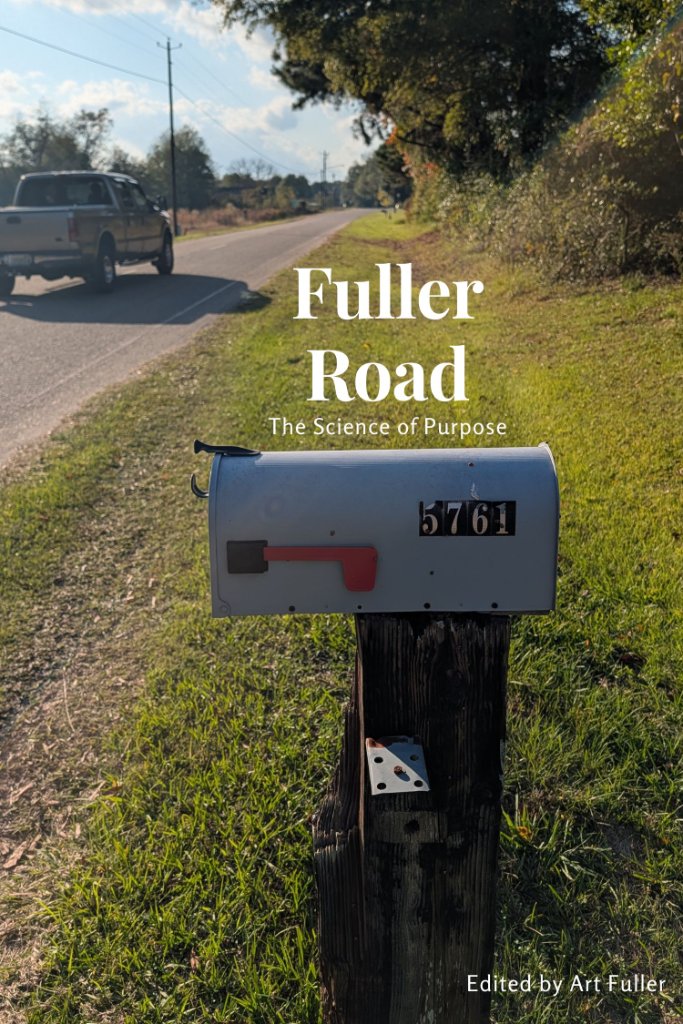
Fuller Road: The Science of Purpose
Read review highlights, key quotes, and ratings — and discover the story of Mary Douglass Fuller that inspired the Five Truths.
Explore the book →